
The New Manager Journey
The Difficult Conversation: Raising a Problem Without Losing the Person
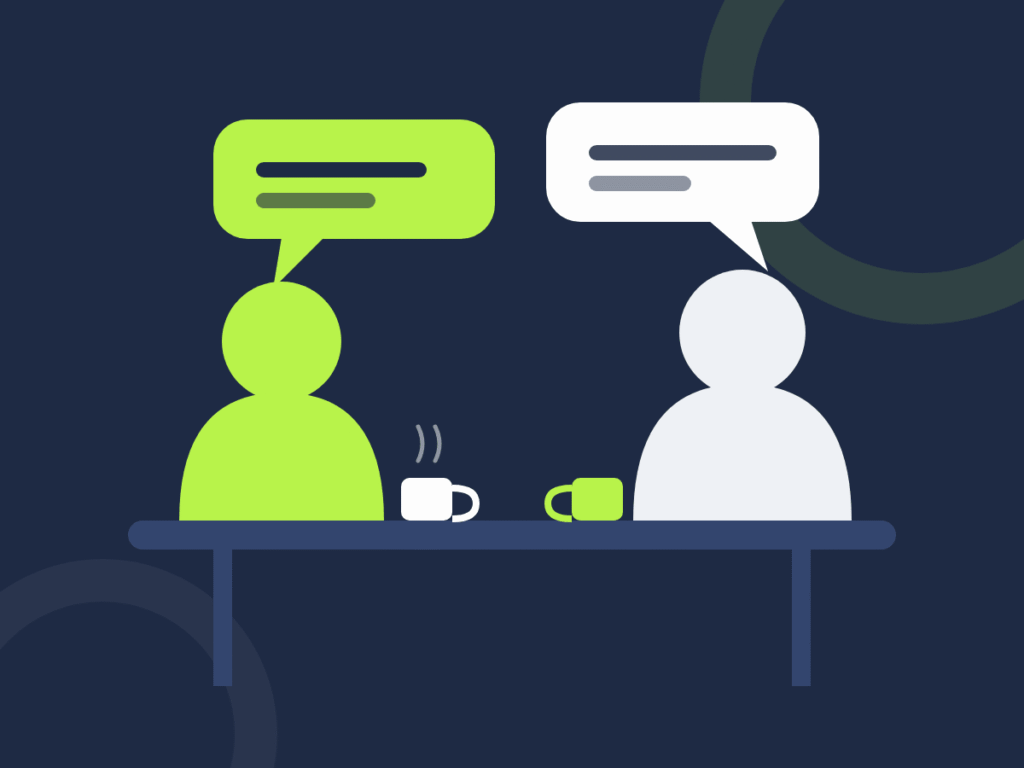
Your first tough conversation as a new manager: a former peer who misses deadlines and undermines you in meetings. Practice it here first. Free when you register.
 Your coach in this module: Najwa
Free
Start your free module nowCreate your free account in under a minute. The module is added to your account straight away.
Skills you’ll practice
- Separating facts from stories before a hard conversation
- Opening with the SBI model: situation, behavior, impact
- Raising problems while protecting face and the relationship
- Staying calm when someone gets defensive
- Listening for the real issue behind poor performance
- Agreeing specific next steps and following up
Skill areas
Builds 3 of the 8 Ludora skill areas
Learning objectives
By the end of the module, you will be able to:
- Open a difficult conversation in a way that protects the other person’s dignity.
- Tell facts from stories, and turn facts into an SBI opening line.
- Use open questions and reflecting back to find the real cause of a problem.
- Agree next steps that are specific enough to check: what, who, by when, and how you’ll follow up.
What it’s about
Layla has just been promoted to team lead. Omar, an older and well-liked former peer who trained her, keeps missing deadlines and jokes in meetings that “the new manager will redo it anyway.” You make Layla’s decisions, see how Omar and the team react, and learn the tools experienced managers use for the conversation most new managers put off.
Who it’s for
New and soon-to-be team leads, supervisors and project leads, especially if you now manage people who were your peers, or colleagues who are older or more senior than you.
How it works
Session 1
From colleague to manager
See why the conversation can’t wait, and how respect and clarity work together.
Session 2
Prepare with facts
Separate facts from stories, and build an opening sentence Omar can’t argue with.
Session 3
Framework lab: facts and SBI
Practice SBI on new cases until it feels natural.
Session 4
The conversation
Have the conversation: open with facts, stay calm when Omar pushes back, and find out what is really going on.
Session 5
Framework lab: listening and agreements
Practice open questions, reflecting back and specific agreements.
Session 6
From listening to agreement
Listen for the real issue, turn the conversation into a clear agreement, and handle a curveball.
Session 7
The final challenge
Put everything together without hints, then look back at what you have learned.
Session 8
Your skill report
See how much you’ve improved, and plan your next step at work.
Questions people ask
How long does it take?
8 sessions of about 10 minutes each, about 80 minutes in total, plus 3 optional 2-minute challenges afterward. Go at your own pace, on your phone or computer.
Do I get a certificate?
Yes, when you pass the module with 60% or more, combining your practice in the sessions, the final challenge and the final test. You can try again as many times as you like. Each certificate has its own link and QR code, so any employer can verify it, and you can add it to LinkedIn.
Is it available in Arabic?
Yes. The whole module is in English and Arabic, and you can switch languages at any time.
Can my company buy it for a team?
Yes. Teams of 10 or more get a discount, and HR follows progress, skills and results on a dashboard.
Built by experts: designed and reviewed by academic and industry experts, and based on proven frameworks. Last reviewed: November 21, 2026
Reviews
1 review for The Difficult Conversation: Raising a Problem Without Losing the Person
Reviews are open to learners who have taken this module.
W (verified owner) –
A useful experience.